


I am allergic to iodine — Can I get the Corona Virus vaccine?
The manifestations associated with I am allergic to iodine These issues raise important clinical questions and require specialized guidance to avoid the risks of self-medication or unnecessary restrictions. When addressing the topic "I'm allergic to iodine — Can I get the Corona Virus vaccine?"This educational guide brings together the practical knowledge of the medical team from the Brazil Without Allergies Project in order to clarify the triggering factors, the most accurate diagnostic tests, and the modern therapeutic strategies currently available.
Complementary Audiovisual Content: Click here to watch the full explanatory video on the official Brasil Sem Alergia YouTube channel..
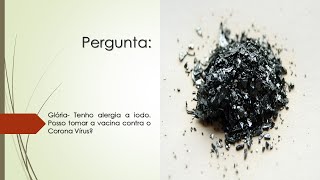
Iodine Allergy and the Covid-19 Vaccine: Is There a Relationship?
A frequent question that arises among patients is whether individuals who report sensitivity or adverse reactions to iodine — often associated with the use of radiological contrasts in imaging exams — can safely receive vaccines against Covid-19. To understand this issue clearly, it is critical to understand the true nature of the iodine reaction, which is often mislabeled as a classic immunological allergy.
From a clinical and immunological point of view, the reaction attributed to iodine does not involve the production of specific antibodies, as occurs in traditional allergies. What actually happens is an increase in the osmolar concentration of the blood caused by the substance, making it thicker. This physical change causes cells of the immune system, such as mast cells, to release inflammatory mediators such as histamine, triggering symptoms similar to those of an allergic reaction through an osmotic and non-immunological mechanism.
Due to this non-immunological characteristic, there are no reliable skin tests (such as prick tests) to predict reactions to iodine, nor specific desensitization vaccines. Furthermore, reactions directly depend on the concentration of the substance and the route of administration. It is for this reason that small amounts of iodine present in foods, such as fish and seafood, or in iodized salt, do not cause the same effect as a contrast administered intravenously in high concentrations.
In fact, it is important to highlight that any adverse reactions associated with the consumption of fish and seafood do not result from the iodine content in these foods, but rather from the presence of allergenic proteins specific to fish. Therefore, if someone has a reaction to consuming fish after having a history of reacting to iodinated contrast, it is a coincidence or a food allergy to the fish protein, and not to the iodine itself.
Given this entire context, patients with a history of reaction to iodine can receive the vaccine against Covid-19 with peace of mind, as there is no cross-relationship or contraindication between the iodinated compounds and the immunizing compounds. If any allergic manifestation occurs after vaccination, it will be related to a specific component of the vaccine itself, and not to the supposed allergy to iodine. It should be noted that this content is strictly educational and informative in nature and does not under any circumstances replace individualized medical assessment with a specialist.
Developments in Evidence-Based Medicine: Drug Hypersensitivity Reactions
According to the international consensus guidelines on drug allergy (EAACI/AAAAI/WAO), the hypersensitivity reactions to medications These reactions are divided into immediate reactions (generally occurring within the first hour to 6 hours after exposure, mediated by specific IgE or by direct activation of mast cells/cyclooxygenase-1 pathway in non-steroidal anti-inflammatory drugs, manifesting as urticaria, angioedema, bronchospasm, or anaphylaxis) and delayed reactions (mediated by specific T lymphocytes, ranging from maculopapular rashes to severe drug-induced skin reactions such as DRESS syndrome, Stevens-Johnson syndrome, and toxic epidermal necrolysis). In cross-intolerance to NSAIDs and in Aspirin-Exacerbated Respiratory Disease (AED)Inhibition of the COX-1 enzyme diverts arachidonic acid metabolism toward excessive synthesis of cysteinyl leukotrienesDefining safe alternative medications and developing challenge or desensitization protocols requires an in-person evaluation at a specialized Allergy and Immunology service.
Pharmacological Safety, Adverse Drug Reactions and Rational Use of Corticosteroids
Immediate Reactions, Delayed Drug Reactions, and Risks of Self-Medication
Another critical pharmacovigilance point concerns the indiscriminate use of long-acting oral or injectable systemic corticosteroids (such as intramuscular betamethasone combinations). Although they provide apparent rapid relief, repeated applications suppress the hypothalamic-pituitary-adrenal axis, raise blood pressure and blood glucose, demineralize bone mass, weaken immunity against infections, and can cause local neuropathic pain when improperly applied to the gluteal region.
Safe Investigation of Therapeutic Alternatives and Prevention
Any patient who presents a suspicious reaction after using medication must write down the exact active ingredient, the time interval until symptoms appear and never carry out re-exposure at home on their own. In a specialized consultation, the detailed pharmacological anamnesis, the allergy test (when applicable to the chemical group) and drug provocation tests in a controlled environment define safe therapeutic options, while basic allergic conditions should receive allergy vaccine corticosteroid-sparing etiology.
IgE-Mediated Allergy, Mixed Allergy, and Difference from Enzyme Intolerances
In contemporary allergology, it is essential to differentiate the immunological reaction against food proteins—such as casein, alpha-lactalbumin, and beta-lactoglobulin in cow's milk, ovomucoid in eggs, or tropomyosin in crustaceans—from non-immune digestive intolerances, such as lactase enzyme deficiency. While intolerance causes abdominal distension, flatulence, and osmotic diarrhea restricted to the digestive tract, food allergy involves Th2 lymphocytes and IgE antibodies or eosinophilic cellular inflammation, and can cause acute urticaria, angioedema, bronchospasm, proctocolitis, or anaphylaxis within minutes of ingesting trace amounts.
Vaccine Mechanisms, Excipients, and Assessment of Immune Competence
In assessing the competence of the immune system—whether in recurrent infections, laboratory alterations in immunoglobulins (IgG, IgA, IgM, IgE), or in people living with HIV under monitoring of CD4 T lymphocyte counts—a careful distinction is made between the use of inactivated/subunit vaccines (widely safe even in immunocompromised individuals) and live attenuated vaccines, whose indication depends on the degree of preservation of cellular immunity. Furthermore, patients undergoing allergy immunotherapy can maintain their vaccination schedule, respecting only small operational intervals as directed by the medical team.
Conclusion and Summary of Guidelines
It is concluded that the efficient management of issues related to I am allergic to iodine It relies on the combination of high-quality scientific information, environmental prevention, and therapy tailored to each patient's profile. In the face of persistent or recurring symptoms, seek evaluation with an allergist and immunologist—integrating thorough diagnostic investigation and established treatment options. rhinitis treatment Whenever indicated — ensures clinical safety and long-lasting health protection.
Scientific references and institutional guidelines
The educational guidelines on this portal follow the clinical consensus of the leading medical societies of Allergy and Immunology:


