


Covid-19 — I want to take MMR — Can I develop Idiopathic Thrombocytopenic Purpura?
In the realm of allergic and immune-mediated diseases, the topic Covid-19 It occupies a prominent position due to the frequency with which it impacts the daily well-being of children, adults, and the elderly. This publication was prepared with the purpose of fully elucidating the issue. "Covid-19 — I want to take MMR — Can I develop Idiopathic Thrombocytopenic Purpura?", offering a structured overview from pathophysiology to diagnostic investigation and the safe prevention of new crises.
Complementary Audiovisual Content: Click here to watch the full explanatory video on the official Brasil Sem Alergia YouTube channel..
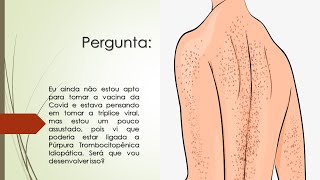
Vaccination against Covid-19 and MMR: The Rare Risk of Idiopathic Thrombocytopenic Purpura
The decision to be immunized against Covid-19 and other important diseases, such as the MMR vaccine, can generate doubts and fears in some patients, especially when concerns arise about rare adverse events reported in the medical literature. One of the frequent questions refers to the possible development of Idiopathic Thrombocytopenic Purpura (ITP) after the application of these vaccines. It is essential to understand that this type of reaction is considered extremely rare in clinical practice.
From an immunological point of view, Idiopathic Thrombocytopenic Purpura may be associated with a type 2 hypersensitivity reaction (according to the Gell and Coombs classification). In this process, there is the production of antibodies of the IgG and IgM classes that are directed against platelets, reducing the count and production of these essential elements for blood clotting. However, statistically, the incidence of this post-vaccination event is approximately one case for every million people immunized.
Considering the statistical rarity of the condition, experts reinforce that the risk of developing ITP should not be an inhibitory factor for vaccination, whose benefits in preventing serious forms of infections far outweigh the risks. If signs and symptoms compatible with thrombocytopenic purpura appear — such as purple spots on the skin, spontaneous bleeding or petechiae —, the recommended course of action is to immediately seek specialized medical evaluation with a hematologist for diagnosis and early initiation of appropriate treatment.
This content is strictly educational and informative in nature and should in no way replace consultation, diagnosis, and individualized evaluation with a specialist physician.
Developments in Evidence-Based Medicine: Vaccine Immunology and Allergen-Specific Immunotherapy
In Evidence-Based Medicine (WHO, EAACI and ASBAI), two complementary strategies for modulating the immune system are distinguished: (1) the preventive anti-infectious immunizing vaccines, which stimulate humoral (neutralizing IgG/IgA antibodies) and cellular (memory T lymphocytes) adaptive immunity against viral and bacterial pathogens; and (2) a Allergen-specific immunotherapy (allergy vaccines), the only treatment that modifies the natural history of IgE-mediated allergic diseases. The controlled and progressive administration of standardized allergenic extracts promotes an immunological shift from the Th2 to the Th1 profile, inducing the expansion of regulatory T lymphocytes (CD4)+CD25+FOXP3+) producers of IL-10 and TGF-β and stimulates the synthesis of IgG4 subclass blocking antibodies, thus sustainably reducing clinical hyper-reactivity and the need for symptomatic drugs.
Safe Immunization, Immune Response, and Protection of the Allergic Patient
Vaccine Mechanisms, Excipients, and Assessment of Immune Competence
In assessing the competence of the immune system—whether in recurrent infections, laboratory alterations in immunoglobulins (IgG, IgA, IgM, IgE), or in people living with HIV under monitoring of CD4 T lymphocyte counts—a careful distinction is made between the use of inactivated/subunit vaccines (widely safe even in immunocompromised individuals) and live attenuated vaccines, whose indication depends on the degree of preservation of cellular immunity. Furthermore, patients undergoing allergy immunotherapy can maintain their vaccination schedule, respecting only small operational intervals as directed by the medical team.
Integration between Vaccination Schedule, Allergy Tests and Baseline Monitoring
Individualized assessment by an allergist and immunologist correlates laboratory tests of cellular and humoral immunity with the patient's actual clinical history. Combining the allergy test well indicated for preventive monitoring — including allergy vaccine In cases of atopic dermatitis, and with immunostimulant vaccines when applicable, broad, safe protection based on scientific evidence is guaranteed.
Conclusion and Summary of Guidelines
It is concluded that the efficient management of issues related to Covid-19 It relies on the combination of high-quality scientific information, environmental prevention, and therapy tailored to each patient's profile. In the face of persistent or recurring symptoms, seek evaluation with an allergist and immunologist—integrating thorough diagnostic investigation and established treatment options. rhinitis treatment Whenever indicated — ensures clinical safety and long-lasting health protection.
Scientific references and institutional guidelines
The educational guidelines on this portal follow the clinical consensus of the leading medical societies of Allergy and Immunology:


